Is Rome Safe?

rome safe

Safety can be one of the biggest concerns when planning a vacation. 'A stranger in a strange land', as the saying goes. That's why it's always important to know what to expect when visiting a new city and country. Take Rome, for instance. It's one of the most popular tourist spots in Europe, but how safe is it? Read on, and find out as we explore how to stay safe in Rome, what to look out for, and neighborhoods to avoid.

Including:

  • How safe is Rome?
  • Common threats to safety in Rome
  • Neighborhoods to avoid
  • Is public transport safe in Rome?
  • and more!

How safe is Rome?

Rome is one of the most historic cities in Europe, so it's no wonder countless people flock there every year. In fact, Rome plays host to around 10 million tourists every year, making it one of Europe's most popular destinations. Some come for the ancient architecture and history-soaked streets. Others visit for the nightlife, food, and shopping. But how safe is Rome?

Rome is considered a relatively safe city, ranking 29th in The Economist's Safe City Index 2021. Many factors make up this ranking, including personal safety, environmental safety, and even digital security. Those factors don't make a huge difference here, as Rome's 'personal security' ranking has it at 29th too!

So, what should you look out for on your trip to Rome?

Common threats to safety in Rome

Rome's most frequent crimes are petty theft. And, like many travel hotspots around the world, tourists are usually targeted. So let's talk about the types of theft you should be aware of on your vacation.

Pickpockets

During peak tourist season in the summer, you should be aware that many pickpockets operate in Rome. Focusing on the most popular spots as well as trains, they target tourists because of the large amount of vacation cash they may have on them.

This is relatively common in any big city that welcomes a lot of tourist traffic, so you may already be aware of the dos and don'ts. If not, or you just need a refresher, here are our tips to keep your belongings belonging to you!

  • Keep your bag, purse, or clutch close to you at all times.
  • Try and avoid carrying large amounts of cash - most places will accept card, even if it's from a different country.
  • Don't leave coats, jackets, wallets, or phones unattended when you're having a drink, getting a bite to eat, or going up to the counter to collect your order.
  • Be aware of distraction techniques. Thieves often work in pairs, so while one may strike up a conversation, ask directions, or 'accidentally' fall into, the other may well be attempting to swipe your cash or camera.
  • Avoid using paper maps when out and about. If you know where you want to go, use your phone's GPS and then stick an earbud in and listen for directions. You'll blend right in.

Muggings

Though chances of a violent mugging are much lower than being pickpocketed, it's still worth being mindful when walking around Rome. Public transport, especially at night, can make you an easy target. If you want to avoid a mugging, do the following.

  • Avoid public transport at night when possible - book a taxi from a reputable company instead. Check online to find one, though you may pay more than a local. Alternatively, go through a taxi app, if you're comfortable.
  • At night, try and travel in groups of two or more.
  • Plan your route around your daily plans and know when and where you're going to avoid unnecessary loitering - you may draw the attention of ruffians.

Scams

Scams have become one of the most popular forms of crime in many cities. Rome is no different, with a number of scams operating throughout the city.

  • Unfortunately, taxis are one of those. As we mentioned above, taxi drivers may be tempted to charge tourists higher rates than locals. Always make sure your driver is on the meter, and if they offer you a flat fee or 'forget' to put the meter on, they're likely trying to scam more money out of you. Politely ask them to put the meter on or request to leave the vehicle.
  • You may also be approached in the street and offered a free charm or trinket. Ensure you do not accept this, and be firm if necessary. If you take it, they will loudly and aggressively demand payment.
  • Another common scam is fake charity petitions. While not every one is fake, it may be difficult to discern which is not. We'd advise you to avoid these where possible, and give through a charity's website instead. Even signing a petition might lead to an aggressive demand for a donation, and that donation is going straight into the scammer's pocket.
  • Make sure you check ATMs for tampering, as scammers target those too. Most places in Rome will allow card payments, so if you're lucky, you won't need to use one at all.

Neighborhoods to avoid

Rome's most crime-riddled neighborhoods include Tor Bella Monaca, Romanina, San Basilio, and Corviale. As these are predominantly residential areas, you may have no reason to ever visit them. However, if you do, try to avoid them at night. If that's not possible, make sure you travel in a group to avoid being targeted as much as possible.
Is public transport safe in Rome?

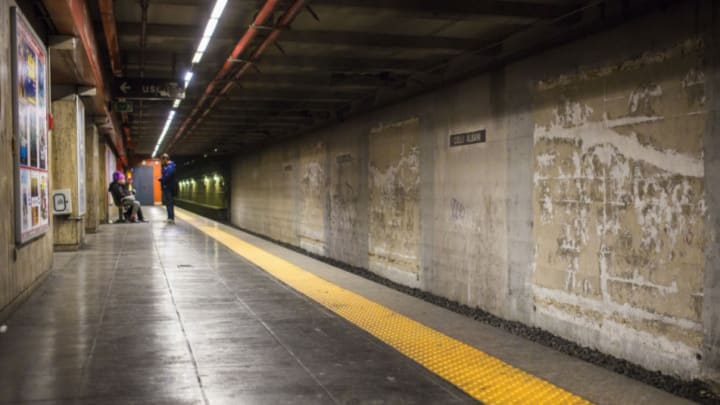
As we mentioned, there are some things worth bearing in mind regarding public transport. We've talked about taxis at length, so be vigilant of those.

Regarding other forms, they are generally safe, especially during the day. Do bear in mind that some train stations such as Termini are pickpocket hotspots, especially in the evening.

As a general rule, try and avoid using public transport at night if possible. That way, you lower your risk of potential muggings or pickpocketing.

And that's our guide to staying safe in Rome! Want to make the most of your vacation? Check out Go City. With us, you can see all of Rome's best bits when and how you want.

Dom Bewley
Rome Travel Expert

Continue reading

Blog

Secret Parks in Rome

Rome is a-flurry with people, sounds and visual delights so it’s not surprising that a visit can leave your senses a bit assaulted. Although Rome’s historically famous for its ancient Empire whose ruins you can’t escape, dotted all around the city, from the impressive Coliseum to the looming dome of St Peter’s Basilica, the city also has some hidden areas to explore – and some only the locals know. So alongside these must-see monuments, take some time-out to enjoy a bit of rest and relaxation in some of Rome’s greenest of oases. In no particular order, our favourite verdant spaces are as follows... Villa Borghese There’s no escaping this little pocket of greenery which sits in the middle of the city, coincidentally in the shape of a heart. Villa Borghese is one of the most popular spots for love-struck teenagers and elderly veterans alike and is a handy resource for a quiet break. With 148 acres to explore, its green meadows and manicured lawns are there to host picnics and Frisbee games, as well as sooth sore feet and unclutter busy minds. In the park are elegant temples and classic buildings, inspired by English architecture, which provide a stunning backdrop and perfect photo opportunity. Within walking distance from most major attractions, you can find it at the top of the Piazza del Poplo – where the Pincio will offer you a great viewpoint over the city, too – and is a safe option for those travelling with a family as there are plenty of toy-selling kiosks and ice cream vendors at hand! Villa Aldobrandini For something a bit more romantic and private, and dare we say it, more adult (sorry kids), Villa Aldobrandini is a tiny stamp sized garden nestled between the Trevi Fountain and Coliseum, up a hill to the East of the Vittorio Emmaneuel monument. Tree lined paths and handy benches make it the perfect stop-off if you’ve been exploring the Roman Forum and are working your way back into the city. If you walk to the very edge, you can overlook the Wedding Cake, the Roman's name for the big white Vittorio Emmanuele, and watch the world go by underneath your feet. Giardino delle Arance If secrecy and seclusion are your thing then the Giardino delle Arance, or Orange Garden to you and me, is just the one. A gorgeous private garden for you and your loved one to explore, or for your kids to pick an orange or two off the trees (there are plenty to go round), it’s an urban oasis and promises spectacular views over the city. Along the banks of the Tiber, to the left of Circus Maximus and the Aventine Hill, you can see the dome of St Peter’s Basilica and the terracotta topped buildings that stretch across the Eternal City. If you’re after a view to remember, go at dusk when you can see the city illuminate under nightfall and you’re guaranteed a bit of calm as the park is at its quietest. Just across the river is Trastevere, the perfect place to find a delicious local meal to finish off your evening in true Roman style. Villa Ada Villa Ada is great escape from the hustle and bustle of the city as it lies slightly out of the centre to the northeast. Best reached by local buses, it’s a huge expanse of green with windy paths through its impressive 450 acres and peaks at a historical summit, Monte Antenne. With a picturesque lake, you’d never think you were in Rome as Villa Ada transports you into a rural, exotic setting with squawking parrots in the trees, bright flowers in bloom and thick grassy fields. A great park if you’re in Rome for a few days and have time to spare out of your busy sightseeing itinerary, and great if you have kids – let them run wild and free and expend all their energy while you sit back and relax with a book. Villa Doria Pamphilj As Rome’s largest landscaped park, Villa Doria Pamphilj is actually the name of the monumental seventeenth century villa (or palace) whose landscaped meadows stretch for over 1.8km2. Up on the Janiculum, it was nicknamed the Bel Respiro, or beautiful breath, thanks to the spectacular views from its post up high on the hill. Much like Villa Borghese this park drew heavily on the classical English influences and is reminiscent of 18th century gardens in Stowe and Stourhead. So if you’re an Anglophile and know your classic architecture, this park has your name on it, not to mention for the Sound of Music qualities. That is of course substituting the Alps for a Mediterranean vista and ancient ruins. With the OMNIA Vatican & Rome Card you can save both time and money and make your trip to Rome that extra bit easier. With Fast Track Entry and free admission into Rome's most popular sights, as well as a 3 day travelcard included, it's your all-inclusive ticket to a stress-free vacation. Find out more, here...
Go City Expert
Blog

4 Days in Rome: Top Things To Do

Discover one of the world's most historic city with our comprehensive guide to 4 days in Rome! Planning to spend 4 days in Rome? With hundreds of fountains, churches and world-famous monuments spanning more than 2,700 years of history, you’ll be spoilt for choice of exciting things to do. Read on for some top tips from our team to help you get the most from your trip! Day 1 There are lots of different kinds of guided tour to help you get your bearings and make getting around during your stay that bit easier. There are hop-on-hop-off bus tours with audio commentary, excellent (and often free) guided walks, bike tours (with or without the help of an electric motor) and even segway tours. Once you have worked up an appetite why not choose a ‘trattoria’, a type of informal restaurant, and settle down to a traditionally Roman pasta dish of ‘cacio e pepe’ or ‘amatriciana’? Batteries recharged, head down to the Pantheon, the roughly 2000-year-old temple built to honour Pagan gods (pan = all, theos = god). It’s the best preserved of the ancient Roman monuments, in part because it was converted into a church in the 7th century. The building is an incredible feat of engineering, featuring an 8m-wide oculus to let in sunlight and a completely unreinforced concrete dome, which is larger than that of St. Peter’s Basilica. Day 2 The Vatican is one of the must-see attractions for most visitors to Rome and there’s lots to see, including St Peter’s Basilica and its Necropolis, the Sistine Chapel and the Vatican Museums, which contain thousands of famous paintings and sculptures. If you spent a minute looking at each painting in the Vatican Museums’ collections, you would have to stay for four years! Next, take in some fresh air with a visit to Castel Sant’Angelo, on the banks of the Tiber. Built in the 2nd century AD, it was originally designed as a mausoleum by the Roman emperor Hadrian. Over the centuries it has been used as a fortress, papal residence and even a prison, before becoming a museum in 1901. The views from the Castle’s rooftop over the city are beautiful and although 4 days in Rome will fly by, it’s well worth leaving time for a stroll by the river and to explore the magnificent grounds. Day 3 Time to return to the monuments of Ancient Rome, starting with the Colosseum, the amphitheatre that is one of the seven wonders of the ancient world. The Roman Forum with its ancient ruins, and Palatine Hill with its views over the oldest parts of Rome, are only a short walk away. Excavations of the Forum didn’t start until 1803 and you’ll be able to see ruins of templates, government buildings, triumphal arches and market halls, literally following in the footsteps of senators and emperors. Finish your day with a relaxing visit to Villa Borghese. Although you couldn’t tell from the name, this is a fairly large public park, which houses a popular art gallery and other attractions. Tickets for the gallery have to purchased online in advance. This means that visitor numbers are restricted and it’s less busy than some of the major attractions. Day 4 There are scores of captivating museums in Rome, but particular highlights are the Capitoline Museums and the Museum of Rome. The Capitoline is remarkable in itself, dating back to 1471, and most of the exhibits come from the city of Rome and relate to its history. Particular crowd-pleasers include the collection of classical sculpture and picture gallery with masterpieces by the likes of Titian, Tintoretto, Rubens and Caravaggio. The museum includes a famous sculpture showing Remus and Romulus being suckled by a she-wolf, part of the legend of Rome’s foundation. This image has come to represent Rome and can be seen around the city. Finish off your visit with a walk from the Spanish Steps, built in the 18th century and a popular meeting point, to the Trevi fountain. Tradition has it that if you throw a coin into the Trevi fountain, you will return to Rome. In fact, every night about 3,000 Euros are swept up from the bottom of the basin and donated to the charity Caritas, to provide services for families in need. This concludes our suggestions for what to do for 4 days in Rome. We hope that you have an amazing trip!
Go City Expert
The Colosseum, Roman Forum & Palatine Hill
Vatican Museums and Sistine Chapel - Fast Track & Reserved Entry

Dreaming of that Rome city break?

Sign up to receive top travel tips

Borghese Gallery
Hop-on Hop-off Bus Tour